
Let’s Stop Obsessing Over CUSMA

Martin Coiteux is an economist and former Quebec cabinet minister with more than 35 years of experience in government, central banking, and pension fund investing, now contributing to public policy as a blogger and podcaster.
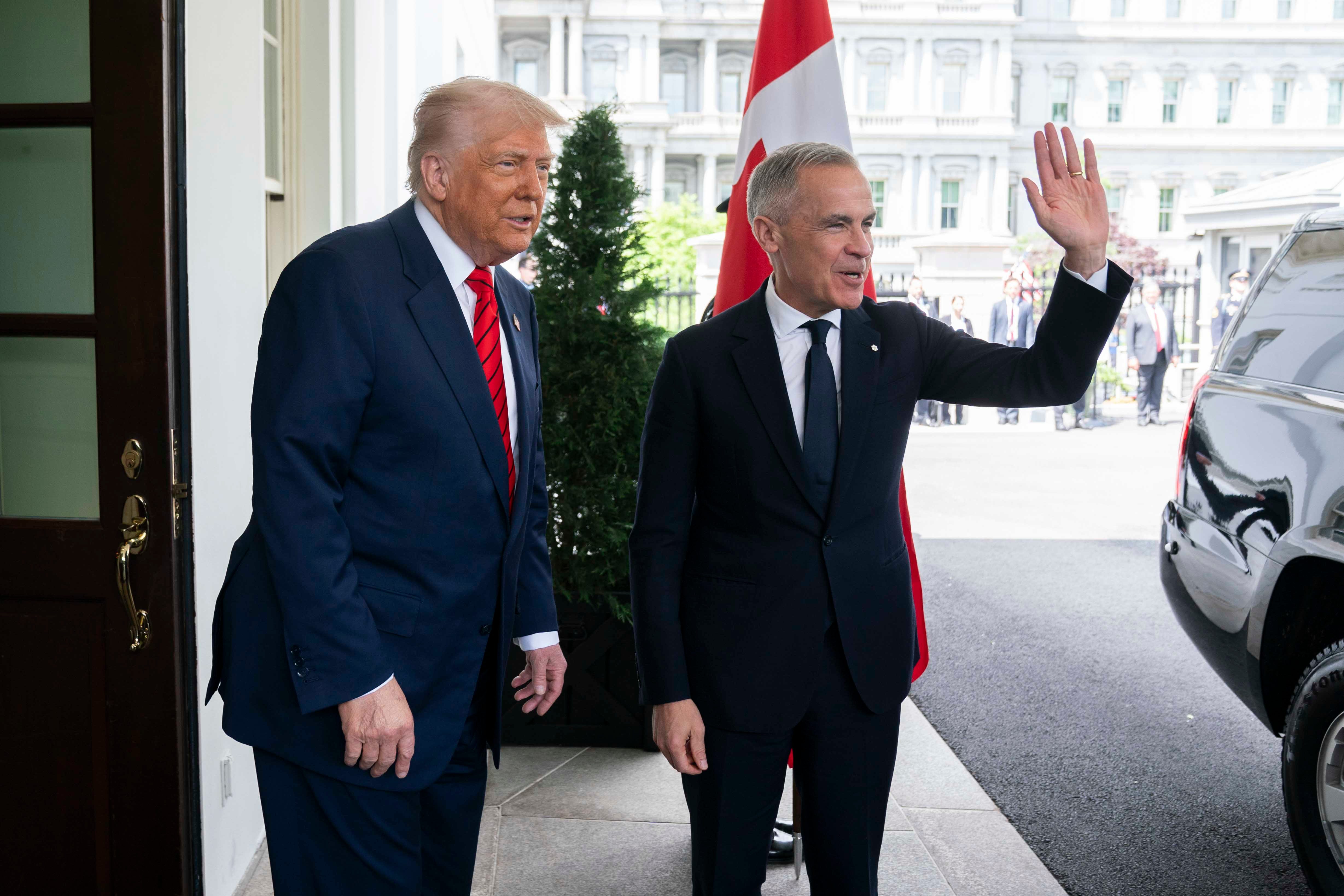
Canada’s political and media spheres seem to have developed an unhealthy obsession with the CUSMA. Will it survive the whims and shifting moods of the US president? Will we ever regain the level of access to the American market that we took for granted just a few years ago? What price will we have to pay to preserve what remains of our access to the American market in exchange for a reduction in certain sectoral tariffs?
The mere fact that we are asking these questions should give us pause even as July 1 has come and gone. A good trade agreement is supposed to provide a stable and predictable framework, allowing businesses to invest and governments to plan. If its future constantly hinges on political developments in Washington, it is no longer fulfilling its primary function.
When Canada signed the CUSMA, many believed that the core of NAFTA had been preserved at the cost of modest concessions. For my part, I was only half convinced. Even then, certain provisions of the new agreement seemed to significantly restrict our future room for maneuver.
With the benefit of hindsight, this impression has only grown stronger. We traded a more institutionally robust and durable pact for an agreement whose future and contours have become increasingly uncertain. Furthermore, the CUSMA binds Canada more tightly to US geopolitical and strategic priorities, making us dependent on the policy choices of a neighbour that is infinitely more powerful, but also far less stable and predictable.
While it was theoretically possible for any partner to withdraw from NAFTA, it contained no expiration date or mandatory review process that made its permanence contingent on recurring political negotiations. The CUSMA, by contrast, introduced a six-year and now annual review that hands the United States a powerful bargaining chip it is likely to use repeatedly, and entirely to its own advantage.
Compounding this asymmetric leverage is a tightening of the rules of origin, particularly in the automotive sector. By deepening the integration of value chains centered on the United States, these rules create a powerful incentive to align Canada’s global trade policy with that of the United States, without Canada having any say in defining that policy.
If Canada and the United States shared the same broad objectives, we might view this loss of sovereignty as acceptable. However, our policy priorities are increasingly diverging when it comes to climate, industrial, and strategic policies. Consequently, this alignment carries a potentially very high cost. When you consider that the CUSMA also hampers our ability to secure a meaningful trade agreement with a partner like China—something NAFTA did not do—we have all the ingredients for the subordination of our economic interests to US strategic imperatives.
Today, Canada needs to diversify its economic and strategic partnerships in Europe, Asia, and beyond. It needs to implement industrial policies that advance its own vital objectives. Our country does not need to increase its strategic dependence on the United States; it needs to expand its strategic freedom of action. Diversification is no longer merely a trade policy; it has become a national security imperative.
From this perspective, the CUSMA is not the model to follow, and we should stop making it a national obsession. If the United States seeks to strengthen the provisions that further constrain Canada’s room for manoeuvre, we should politely but firmly decline. Of course, we must be realistic and seek to maximize our access to the American market. However, we must avoid signing anything out of pressure and fear that would merely buy us a fleeting moment of calm at a prohibitive long-term cost.
Courage, yes. Boldness, certainly. But above all, an unapologetic defence of Canada’s present and future interests.
A French version of this text has also been published on the author’s personal site: martincoiteux.com.
If you enjoyed this, you may also like:


 | A guest post by
|
Someone needs to explain our energy relationship with the US. If Canada is the leading exporter of oil to the US, why can we not use that as leverage? As far as I can tell, the answer continues to be "because that's the way it's always been."