
Sage contributors discuss the global energy crunch. Will Canada seize the opportunity, or waste another energy crisis?
Edward Greenspon
Edward Greenspon is a former Editor-in-Chief at The Globe and Mail and President & CEO of the Public Policy Forum. He currently serves as co-chair of Deloitte’s Future of Canada Centre.
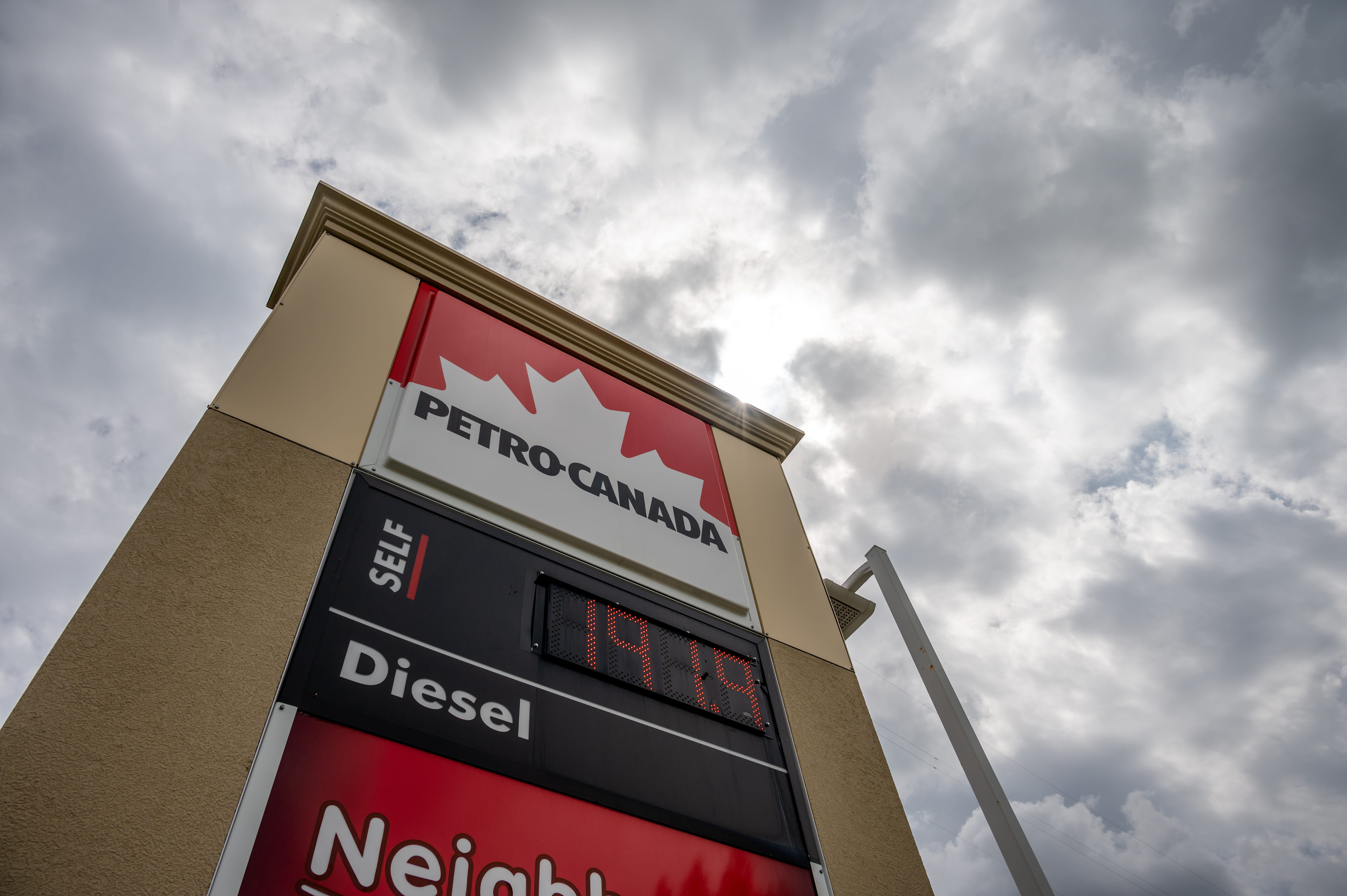
About two weeks ago, people were talking, for the first time that I’d heard it, of this being the worst global energy security crisis ever. And for somebody who came of age during OPEC boycotts, that really whipped my head around. In Toronto today, I think gas is $1.70, diesel $2.20, that’s not a good thing obviously, and it’s going to be a long time till it gets fixed up. I think the head of the IEA Fatih Birol said something today about the consequences will far outlast the war. So with that, I would love to open it up for discussion.
Cathy Bennett
Cathy Bennett is a board chair, director, and investor with 30+ years of experience. She is also a former Minister of Finance for Newfoundland and Labrador.
And I wouldn’t mind leaning in. I would say that I think the downstream sort of upstream costs associated with petroleum or energy consuming industries is substantially not well understood but might be too scary for a podcast.
Edward Greenspon
I’m happy to be scared. Why don’t you elaborate on that a little bit?
Cathy Bennett
Well, if we think about how much of the energy market in Europe, for example, is fueled based on assets that are related to either oil or gas, we’re going to see a significantly big shift in price of goods, cost of goods, that’s going to trickle into the economy for a bunch of months, maybe even years.
Andrei Sulzenko
Andrei Sulzenko is a former Senior Assistant Deputy Minister, Policy in the federal industry department and a longtime auto industry commentator.
If I can jump in. I was in the finance department in the 70s when both oil shock situations occurred. And I recall - I’m not a macro economist, so I can’t really speak to this - but I recall folks in the department at the time did an econometric study that showed that the increases actually had a relatively small ultimate effect on prices at the consumer level. And I was surprised by that. Now it’s so long ago, I can’t even cite what the findings were, but it was a surprisingly small number. And speaking about small numbers, I recall when we did the FTA with the Americans, there was similar work done by at the time, mainly the Economic Council. And the end result there was modest as well, in terms of the lower cost from lower tariffs and so on and so forth. That doesn’t take into account all the , dynamic effects which are hard to model. But I’m surprised, and I don’t know maybe one of the macro folks can comment on it, because it is counterintuitive, in a sense.
Edward Greenspon
Chris Ragan would like to.
Christopher Ragan
Chris Ragan is an economist and professor at McGill University. He has worked in the Department of Finance and at the Bank of Canada.
I would make three quick points, and Carolyn or David might want to jump in on this, but one thing that was clearly different in the 1970s to today is that back then, inflation expectations were not anchored anything like what they are today. And so when a supply shock pushed up prices, price of oil first and then it fed into other prices, it fed into inflation expectations. And I think there’s reason to believe that today, with 30 years or so of successful inflation targeting, which has really anchored expectations very well, I think there’s reason to be more optimistic on that front. That’s the first thing.
The second thing is that our economies are less dependent on oil than they used to be, in terms of units of dollars of oil per dollar of GDP, like we just use less oil to produce a unit of GDP, partly because we are a more service-based economy than we used to be. But even the manufacturing economies are more efficient in their use of oil, and so the effect of oil is less than it used to be on the economy.
The third thing I would say is the exchange rate effects are different in Canada in particular. Canada is a bigger net exporter than it used to be. The United States used to be a huge net importer, and now it’s more or less self-sufficient, and that means that the Canada-US exchange rate is less dependent on swings in energy prices, or at least that’s my sense. So there’s lots of reasons to think that things are a little bit different. But that doesn’t mean there’s not a problem. And the longer the Strait of Hormuz stays closed, and the longer that 20% of the oil isn’t getting through. And fertilizer, I didn’t realize that fertilizer was so sensitive as well to the Strait of Hormuz. But those changes matter for sure. And the longer they go on, the more they’re going to matter.
Edward Greenspon
Okay, Dan.
Dan Ciuriak
Dan Ciuriak is a former Deputy Chief Economist at the Department of Foreign Affairs and International Trade (DFAIT) who has published widely on trade issues.
Just to kind of follow up on Chris’s points, things are very different today in many ways as Chris described, One of the most important things is that you don’t have the impact on the balance of payments or the trade balance from the net importation of oil in the United States. It was a major factor in driving down the US economy in the 70s.
But one thing I think is not good for us is the fact that we have a much more precarious society right now. Back in the 70s, there was a cushion, we had a very strong middle class, a segment of the population that could absorb the increases. Right now, affordability is a huge thing in the States. It’s a huge thing for Canada as well. Precarity is a much bigger issue in the US and for us. In terms of the social impact, I think we have to reckon that the increase in the price of oil, which we’re seeing right now, is going to have more consequences this time than it would have had in the 70s. And that kind of works to offset the points that Chris was making about the sort of production side of the economy.
Edward Greenspon
Thank you. Dan, going to Carolyn.
Carolyn Wilkins
Carolyn Wilkins is a former Senior Deputy Governor of the Bank of Canada with prior roles at the Department of Finance and Privy Council, now teaching at Princeton University and serving on the Bank of England Financial Policy Committee.
I think a lot of good things have already been said. I would just say that the frame of the question of oil is quite interesting if you’re thinking about that sector. But when you listen to central banks, and without revealing anything that I might know about the Bank of England, they’re not thinking about it just with respect to oil. They’re thinking about it more like covid, where yes, there’s energy prices, but there’s supply disruptions everywhere. So, it’s more like a series of shocks that are putting upward pressure. Pharmaceuticals is one of them. There’s steel, there’s fertilizers, there’s just a lot of different supply chains that are being disrupted. And I think there’s going to be a real hesitancy among central banks to make the same mistake as last time. That’s why, if you read what the Bank of Canada came out with, and actually all of them, they sound a lot more hawkish than they were before, and so, I mean, for sure, I agree with Chris. It’s not the 70s. The inflation expectations are just so much better anchored. But at the same time, the cost of living is meaning that people are thinking about their real wage. And so, if the prices go up, there’s a yeah, okay, well, maybe inflation is going to come back down, but the price level is still going to be high, and I need, I need to catch up. I mean, so there’s still that dynamic from covid that I think I would be worried about, and I know that some others are. So for Canada, I think it’s a really important point about the exchange rate sensitivity, because that was what before created a buffer, right? It would kind of offset some of the effects on prices of the energy, but I don’t think we’re going to see that as much as we did in the past. And so, I guess the final two things I’ll say is that we can assume the Bank of Canada is going to do the right thing. I’m just not even going to imagine that.
I’m not so sure about the U.S. And no matter what Canada does, there’s we’re still going to be victim of whatever they do or don’t do on the central bank side. And then the last thing I’ll say is this, I’m on the financial stability committee or the Financial Policy Committee of the Bank of England, and if you’re worried about financial stability and the vulnerabilities out there in AI and really happy pricing, all these sorts of things, this is like, increase the problem or fatten those tails, put it that way. And so I don’t think it’s just a slowdown. How bad is inflation going to be? I think there’s a potential trigger. It wouldn’t be my base case for some repricing that could cause some accidents in the financial system.
Edward Greenspon
Cathy, then Peter, then David.
Cathy Bennett
When I made my earlier comments, I was thinking in particular about the automotive sector where things like synthetic rubber, polyurethane foams, engineering plastics are all practical materials that go into that already fragile industry in Canada. So I think it isn’t so much about what’s going to happen next week with 40, 50, 60, 70 cents increase in gas prices, which to Dan’s earlier comment will really have an impact on the consumers who are already concerned about the share of wallet that they’re losing based on their own experience with prices going up. But it’s also the industries that are under stress and have to respond in some way to supply chains that are going to be as uncertain as, if not more uncertain than they would have been during the pandemic. Not because of access, but because of costs, and costs they have no control over or ability to influence at all.
Peter Harder
Peter Harder has served as a Deputy Minister in a variety of departments, including Treasury Board, Industry and Foreign Affairs. He currently serves as a Senator in the Senate of Canada.
Beyond the financial consequences of all of this, I guess I’d like to just put a word in for the huge disruption in geopolitics that we’re experiencing. I think this is the equivalent of what the British Empire faced in Suez. Ironically, I think it’s the end of American leadership, and the consequence of which we don’t yet understand. That is to say, what is the impact on NATO, and the big loser this week is Ukraine, in terms of both capacity and attention, I worry about the big winner, which is Russia and an oil tanker heading to Cuba, and what that could cause next week. I just think we’re in a huge mess of which the economic consequences will be hugely important. We are also in a crisis of global governance, which will have a long tail, and it may well have consequences we cannot yet imagine.
I just want to add that dimension. I’m very much a pessimist. I think NATO is finished. And the consequences for Ukraine, and therefore the effects in Europe, are very significant, and we’re caught. We can always add, of course, what that means to the Gulf region, what it means for Israel, where they decided to pursue a strategic objective different than their partner in this. I think that when all is settled, the world is completely changed.
Edward Greenspon
Yeah, 14 months is a long time in politics.
Edward Greenspon
David, and then Don.
David Dodge
David Dodge has served as Deputy Minister of Finance and Deputy Minister of Health. He is also a former Governor of the Bank of Canada.
I’m on the pessimistic side here, too, with a lot of others, including Peter and Cathy, for the cost reason. We’re in the middle of a poly-crisis, trying to manage things here in Canada, this is one more stick on the camel’s back that our governments have to deal with. Whether it will be the stick that breaks the camel’s back or not remains to be seen, but it certainly is one more addition to it, and I think we are wrong to underestimate the impact that it’s going to have from the cost side on the production side of our economy.
Secondly, of course, on the consumption side, because it simply will eat into the ability of consumers to deal with everything else. So yes, I think this is a big deal. It is a big deal also in some ways in the same way that it was in the 70s in that it forces changes in the way we do things. Perhaps not quite to the extent it did in the 70s, but it certainly is going to force some changes in the way that we generate electricity.
So we could be underestimating the importance of what is going on and the increase in the difficulty that our governments, federal and provincial, have to deal with all the other problems that they’re trying to deal with. This is one more burden on consumers at a time when we are going to have to place much greater burdens on the consumers anyway to deal with the other problems we have in the economy. So this is a big deal going forward, and it makes it very hard for the Americans, but it makes it very hard for us to deal with those problems.
Edward Greenspon
Don, are you going to be the rare optimist?
Don Wright
Don Wright has served at the Deputy Minister level in the Saskatchewan and British Columbia governments. He currently serves as a Fellow with the Public Policy Forum, a Senior Fellow with the C.D. Howe Institute, and Senior Counsel with Global Public Affairs.
Well, I don’t know if I’ll be an optimist, but I’ll take it in a slightly different direction. One thing that we haven’t really talked about is the notion of energy security and what this shock is going to do around the world. So this is the second shock within four years. The first one was the Russian invasion of Ukraine, of course. And then this one.
We still don’t know how long-term the damage to the infrastructure is in the Middle East right now, but certainly I think we’re going to see jurisdictions and industries saying they don’t want to be hostage to what happens there. And so I think you’re going to see things like in Asia some of those countries are going to go back to coal. They’re going to turn that switch. The transition away from coal and natural gas that’s probably going to reverse, and I don’t think climate change is really going to be top of mind. And I think Europe, they have just become so uncompetitive because of their energy costs, they’re going to have to take a different tack than what they’ve been doing over the last few years. We need to factor that in.
From Canada’s point of view, there’s kind of a mix of good news and bad news. I mean, the good news is we are net exporters of oil and natural gas, so that other things being equal, the price of that should go up. But if my hypothesis about Asia and Europe saying, ‘yeah, we got to tilt away from natural gas,’ maybe the long run demand is going to be less than we might have banked on.
And then a final point is, and this is good news, I guess, Ed, that North America is basically the only part of the industrialized world that is self-sufficient in energy. And I think some of those energy intensive industries that Cathy was talking about might find a more hospitable home in North America than in Europe or Asia. Fertilizer is a prime example. If our natural gas is going to continue to be significantly lower price than the rest of the world, then we should be looking at doing things with that natural gas and making fertilizers, one of them. My quick thoughts.
Edward Greenspon
Yes, it’s an interesting question if all this makes us more attractive for reindustrialization. I can recall when I was at Bloomberg, one of the meta stories we were following with the development of shale gas was the kind of re-industrialization that was going on, particularly around the Gulf Coast. And what opportunities that produced.
And what obligations. You can think, after the Ukraine invasion of 2022, the second invasion of Ukraine, that a lot of countries came to Canada asking us to develop more gas. I’d be interested to know the position you think that Canada finds itself and indeed how that impinges on the climate and energy equations.
Andrei Sulzenko
This may be somewhat off topic from what you were just suggesting. But when Carney came into government, he promised big things in terms of projects, and that’s still on the table. We haven’t seen much activity yet. But if you think about the oil sands, or at least our oil and gas resources, mainly in Alberta and in the West, if you look at it 20 years hence, this could be actually an opportunity to spur investment there. If you fast forward - recognizing that projections 20 years out are pretty wonky - but the IEA thinks that there will be a slight decrease in global demand, and a steady decline in developed countries. Down the road, this could accelerate. If you think about what’s oil used for, it’s mainly transportation. It is now clear that within a couple of years, if not next year, the electric vehicle industry is going to be revolutionized by solid-state batteries, which are less volatile. They hold a charge much longer you get longer distances. They operate in cold climates much better. And so forth. And if that’s the case, I think there’ll be a potential for a fairly rapid acceleration of electrification in the vehicle industries, including aircraft surprisingly, which will drive down demand for petroleum.
Now that may take 20 years to sort through, but the point I wanted to come to is that 20 years from now, Canadian resources may become stranded resources because we are already the highest-cost producer in the world for petroleum. The Americans are a little cheaper. I mean, we’re about double the cost of Saudi Arabia. And so when there’s a decline in demand, guess what’s going to get cut off first. It’s the highest cost producer, obviously.
So if you fast forward 20 years, and you consider the importance of that industry to our current prosperity, it would be a shame not to exploit it now in the anticipation that there’s going to be less demand for it down the road. So it argues for fast forwarding some of these projects.
Carolyn Wilkins
I couldn’t agree more, I guess. I guess that’s in some ways, what Bill C5 at the federal level and Bill 5 in Ontario is supposed to help. It’s not the only thing, but it feels like there’s these infrastructure bottlenecks that get in the way of actually exploiting these opportunities. And we can’t seem to fix that. Some would argue that if the government’s trying to do big projects, they’re just going to fail anyway because they’re all white elephants. I don’t share that view. Others say if you shorten the timeline, all you do is risk making more mistakes. Again. I don’t necessarily agree with that either.
I’m pretty interested in this issue, but it’s outside of my expertise, and so I’d love to hear what other people think about these Bills and how important they are to actually being able to take advantage of some of the opportunities that we’re seeing and take advantage of them quickly.
I don’t know if you’re allowed to ask questions back to people, but that’s my question.
Edward Greenspon
Don and then Cathy.
Don Wright
Look, I agree with most of what Andrei said, but just a couple of qualifications. The notion that our oil and gas is high cost in the world is not generally true. I mean, our oil: high fixed costs up front to build these oil sands plants, but the marginal cost after it starts producing is very competitive. Yeah, Saudi Arabia has got incredibly low marginal cost. But most of the other reserves in the world are depleting, and the oil companies have to invest in new exploration. That’s likely where the fall off in investment is going to happen if there is a reduction in demand for oil.
I guess the other thing that concerns me is when we talk about the rapid electrification. It’s not clear to me that our country, or any other country in the Western world, anyways, is remotely close to being able to build the generating capacity that you need to make that transition. So just a little bit of a caution there.
Cathy Bennett
Yeah, I just wanted to add to the comments that Andre was making, and talk about the non-land-based oil and gas assets that Canada has. One of the two basins off the east coast, the Jeanne d’Arc basin. is reported to have 97 trillion cubic feet of natural gas and then we haven’t even extracted an ounce of any natural gas from that field. It’s because it’s sea based. It’s not land locked with pipelines. And because of the type of crude it is, we just sell to the highest bidder. So if you were ever looking for an asset as a country to extract and sell to help offset some of the other headwinds we’re facing, wouldn’t that make a logical choice if you can sell to the highest bidder. I sound very opportunistic, but as a proud Canadian who supports Canadian public health care, I want as much for the provincial and federal treasuries as we can possibly get.
Edward Greenspon
Thank you, David, I see you leaning in?
David Dodge
Yes, it’s kind of Pogo world we’re living in. We’ve seen the enemy, and he is u. And it’s the way we are managing things. This goes to Carolyn’s point. I think these bills are extraordinarily important, and we have to move further. And we need to move quickly. Further, whether we have the will to do that, we will see because it requires a degree of national consensus to move on these issues. But we have the capacity to deal with that, to reap the benefits in the medium run and longer run of our natural resources in a way we have not been willing to do. That’s kind of where we are.
So the bills are very important in and of themselves. But what’s equally important is the follow-up, the actual implementation. Will we open up the mines, open up the deposits, open up the transportation that we need. So yes, Carolyn, I think you’re absolutely right.
Edward Greenspon
Peter, you kind of look like you’re thinking about that.
Peter Harder
Well, yes. The challenge today is we don’t have proponents for some of these projects. I could argue that governments are prepared to bend the rules and accelerate their role, but we haven’t had the proponents come forward with a proposal. If the proponents are only governments, we don’t have a solution.
Christopher Ragan
I agree with what Peter said. But I think there’s another challenge as well, which is, I am not yet convinced the federal government is prepared to do what it may need to do to get some of these projects built. For example, I think that since the MOU with Alberta, and since the budget, I think the federal government has been fairly unclear on whether they are prepared, for example, to ensure that a pipeline to tidewater gets built even if British Columbia opposes it. We’ve heard sort of different takes from Tim Hodgson and the Prime Minister on that.
And of course, the politics is that we don’t want to push any pipeline against the interests of a province. But it is federal jurisdiction for a pipeline that crosses borders. So is the federal government prepared to actually do that?
I think you have a similar question on things that ar e on traditional indigenous territory. You can say, ‘well, does UNDRIP actually give a veto, or what is free and informed prior consent really mean?’ Is the federal government really prepared to make sure that some of these projects that are deemed to be in the national interest get built. So I think that hasn’t, and maybe it won’t be tested until there is a proponent. But it’s not just the proponent that we lack. It’s going to be the political will. Back to David’s point. The political will is going to be important. I hope it’s there. But I’m not sure that it’s there.
Caroline Wilkins
Thank you for coming back to that point. When you think about those bills, you don’t even know whether they’re going to be successful anyway. At the provincial level, there’s a process that has been started in the courts with a number of First Nations who were saying this is unconstitutional, because you have a duty to consult. And to get a proponent for this.
I don’t know how to fix that because I think these bills are really important. But then so is consultation because even if you push something through, it could come back in the court later anyway, right? And so you want as good a consultation as possible to reduce that risk. And then look how other countries do this, say Australia. They actually have a clearer title system, so you kind of know who has the right to this consultation. And they also have arbitration, It’s not a case by case but a centralized body that basically forces an end to the consultation at some point. And we don’t have any of that. I’m being long winded so I apologize to all of you, but for me, that unblocks one of our big problems, not all of them, but one of them.
Don Wright
Just to kind of continue on the same theme, if a pipeline to the coast of BC is deemed to be in the national interest, then the only way it gets built is if the federal government act as if it’s in the national interest. And take upon itself the responsibility to do the consultation with First Nations. I mean, the kind of pattern of companies going out and seeking accommodation and agreements with First Nations is basically the federal and provincial governments offloading a responsibility that actually belongs with them.
In a case like this, it really would have to be the federal government that takes the lead. And going back to Peter’s point, I don’t think you’ll see a proponent until there is a strong declaration from the federal government that it believes this project is in the national interest and will do what’s necessary to make it happen.
Andrei Sulzenko
Just to follow on the discussion on indigenous consultation, there is an obvious solution to this, and it has been done before, and certainly been attempted a number of times, and that is to give the various groups, so called equity participation in the project.
Christopher Ragan
I think that’s a requirement in the MOU with Alberta. I think is that there be indigenous equity position?
Edward Greenspon
Cathy, just before I come to you, I guess the question is if that’s enough, and to whom is it relevant? Because in some British Columbia instances, those nations that have resources on their land have been much more interested in equity positions and exploiting their resources. Those who don’t have the resources on their land and who might live off the sea, like the Coastal First Nations, are more reluctant. So it’s not a one-size-fits-all proposition. I guess it’s a tool, I think a good tool in the toolbox, but I don’t know if it’s a definitive tool.
Cathy Bennett
As many of you probably already know, there’s a substantial natural gas field between New Brunswick and the Quebec border, and it’s not being led by the provincial government at all. As a matter of fact, the provincial government’s been fairly silent but they’ve left the indigenous communities to coalesce and come around with consensus so that then their proponents will have a clear path to execution. But to Carolyn’s point about the legislation, the problem is, if you get the consultation in the wrong order, the capital isn’t going to flow or if the capital has had a bad experience before in trying to get projects happening in Canada and have misunderstood the reality of early stage consultation, then they’re not necessarily looking to Canada right now. They see us as a regulatory, complicated place to get things done because of the requirements, societally, to be able to include indigenous conversations as part of these large scale projects in the Maritimes. For folks that may not know, the federal government and indigenous groups actually partnered on two large transmission lines. There’s equity ownership from the two indigenous communities. And that has actually accelerated those two transmission lines that the provinces, both New Brunswick and Nova Scotia were quibbling and arguing about who’s going to pay the indigenous communities came in, and they did the partnership, and that’s what’s actually got. The transmission line advanced a little faster. So this is an important lever to discuss, but it has to be sequenced at the right time in the right way, to unlock the large scale capital in the way that we hope to unlock it.
Edward Greenspon
Okay, I think we’re near the end, I want to say that the conversation, first of all, has been great. You guys have touched on something I have been concerned for a while - that although it felt like there was a great deal of urgency in the first half of 2025, the forces of inertia seem to be working their ways to slowing things down yet again.
And now we have this added crisis started by the war on Iran and this crisis creates both an opportunity for Canada and a need in the global market for us to be more present. As some of you are saying, it might be a fairly short window in terms of investment. That raises issues that are beyond my ken to figure out, only a company can calculate if it’s worth the risk, and how long they think the market will be there.
The problem is that even if so, will the urgency lead us to move against these forces of inertia. I’m not convinced. I have to say I was quite hopeful that the invasion of Ukraine, which has been a tragedy for Ukraine and a tragedy for the world, but nonetheless, I had some hope it would spur Canada into being a better global citizen. And I’m not too sure that happened. And I’m not sure it happens this time out.
I just want to end with perhaps a note of optimism - it’s been a pretty pessimistic conversation - but do you think Canada may get galvanized to action finally?
Don Wright
Well, I think it’ll depend on the outcome of the three by-elections coming up, If there’s a majority, even a very thin majority government, it can embolden these folks a little bit more, I’m still wearing my optimist hat in the sense in that the fact a Liberal government is talking about a positive role for natural resource development in the country for the first time in a long, long time, is significant. But as we’re saying, it’s time to actually see whether the rubber hits the road in the next little while.
Edward Greenspon
Okay. It’s after 4 pm so you’ve done your duty, Wishing everybody a good weekend.