

Miville Tremblay has over 35 years experience in economics and finance, including at the Bank of Canada and La Caisse. Since 2020, he has been a regular op-ed contributor at La Presse.
The war in Iran could prove to be the straw that breaks the camel’s back for a global economy already burdened by major challenges.
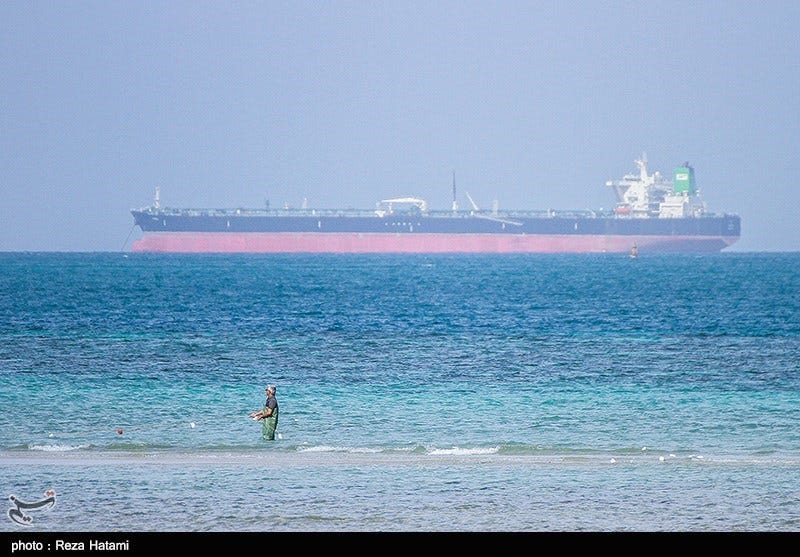
A blockade of the Strait of Hormuz by Iran has long ranked among the preeminent geopolitical risks—one-fifth of the world’s oil passes through it—yet it was always deemed improbable, on the assumption that the United States would surely intervene.
Yet, here we are, grappling with the most significant disruption to oil supplies in history. The International Energy Agency’s call to release strategic reserves will offer only partial reprieve.
The American president’s hubris appears to have been laid bare by the fanaticism of the mullahs. He gambled on the swift collapse of the theocratic regime; yet, even amidst the ruins, it has proven more resilient than Trump—who is now preoccupied with the Republican majority in the upcoming November midterms.
Weary of mired military adventures, Americans are seething at a 27% average spike in gas prices since the onset of a conflict knowingly ignited by Trump and his Israeli ally, Benjamin Netanyahu.
In a bitter irony, Trump is now soliciting support to reopen the strait from nations he has antagonized in myriad ways. Unlike the U.S., a net exporter, Asia and Europe are oil importers, yet their public remains hostile to siding with the president.
Markets had wagered on a blitzkrieg, but as the situation unravels, complacency is unwarranted. Crude prices will need to climb further to force a “demand destruction” commensurate with the supply shortfall.
The shockwaves from oil and gas will ripple through the economy, driving up prices via freight costs and urea—a natural gas derivative and the world’s most widely used fertilizer.
Though central banks may strip out volatile energy costs from their core inflation metrics, they will be loath to cut interest rates prematurely following the trauma of post-COVID price surges. Facing stagflation, they are caught in a pincer: cutting rates to stimulate growth risks fueling inflation, while raising them to tame prices threatens employment. The temptation to wait it out will be strong.
With public debt at record highs, bond markets are demanding higher yields despite their safe-haven status. This spells trouble for the precarious private credit market, which has poured billions into energy-intensive AI data centres. The rising cost of natural gas for power generation now threatens their profitability.
These factors provide ample tinder for a stock market correction—perhaps even a bear market—following years of plenty. Collectively, they will prompt consumers to tighten their belts and weigh heavily on corporate investment appetites, dampened by pervasive uncertainty.
This oil crisis will produce losers—the consumers—but also winners. In the short term, the Alberta treasury will reap a windfall, shared with the American shareholders of oil sands firms. The same holds true for U.S. shale oil and gas producers. The outlook for global majors is more nuanced, given their exposed interests in the Middle East. Another winner is Russia, for whom Trump has just granted a 30-day reprieve on oil sanctions.
Mark Carney’s strategy aims to forge Canada into an energy superpower. Some see the Persian Gulf blockade as a catalyst to accelerate pipeline construction to supply a dependent Asia. Yet, shareholders must be convinced; they currently favour hefty dividends and buybacks over risky investments in a volatile market, knowing the crisis will well be over by the time a new pipeline is commissioned.
By then, Asia will have surged further ahead in renewables, which are quick to deploy and reduce reliance on foreign oil. Thanks to China, solar panels, wind turbines, and the batteries needed to mitigate their intermittency are now cheaper than any other form of power generation.
A decade after the Paris Agreement, electric vehicles have jumped from 1% to over 25% of global sales. Only in North America do some politicians still believe the future belongs to fossil fuels—even as U.S. heat pump sales outpace natural gas boilers.
Decarbonization is no longer the primary selling point. Renewable solutions are cheaper, faster to deploy, and shield populations from geopolitical shocks.
Finally, amidst the grim wreckage of this war, there glimmers a hope: that the autocracies of both Tehran and Mar-a-Lago emerge as the ultimate losers.
A version of this article also appeared in La Presse.
